

The Constitutional Court’s decision in Economic Freedom Fighters and Another v Speaker of the National Assembly and Others (CCT35/24) is a significant judgment on presidential accountability and the constitutional impeachment process under section 89 of the Constitution.
The Court was asked to determine the constitutionality of Rule 129I of the National Assembly Rules following Parliament’s decision not to proceed with an impeachment inquiry into the Phala Phala allegations against President Cyril Ramaphosa, despite the Independent Panel having found prima facie evidence warranting a further inquiry.
In doing so, the Court clarified the constitutional limits of Parliament’s discretion in impeachment proceedings and reinforced the principles of accountability, transparency and effective parliamentary oversight.
The Parties and Background to the Dispute
The application was brought primarily by the EFF against the National Assembly, the Speaker of the National Assembly and the President in his official capacity.
Following the Independent Panel’s finding that sufficient evidence existed to justify a further inquiry under section 89, Rule 129I required the National Assembly to decide whether the matter should proceed to an Impeachment Committee. On 13 December 2022, Parliament voted against referring the matter, effectively ending the process before any full investigation could occur.
The Issues Before the Court
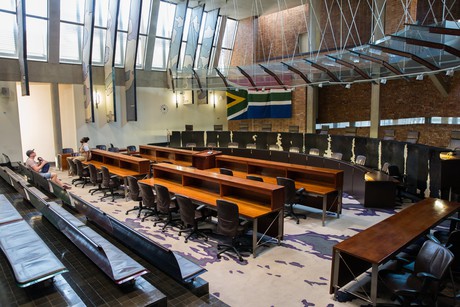
The Constitutional Court had to determine two primary issues as set out below:
- First, the Court had to decide whether Rule 129I of the National Assembly Rules was constitutional. The applicants argued that the rule unlawfully allowed Parliament to terminate the impeachment process even after sufficient evidence had been identified by the Independent Panel
- Second, the Court had to determine whether the National Assembly’s vote of 13 December 2022 was itself constitutional and lawful. The applicants argued that the vote was invalid because it was taken under an unconstitutional rule.
The Central Constitutional Question
At the heart of the matter was whether Rule 129I allowed Parliament to avoid its constitutional obligations under sections 55 and 89 of the Constitution.
More specifically, the Court had to determine whether Parliament could stop the impeachment process before a full investigation into the allegations against the President had been conducted. The Court also had to decide whether the rule undermined Parliament’s constitutional duty to hold the President accountable.
The majority judgments emphasised that section 89 exists as an accountability mechanism to ensure that even the President remains subject to constitutional scrutiny.
Constitutional Principles Applied by the Court
The Court’s judgments centred on the constitutional principles of accountability, transparency, parliamentary oversight and the separation of powers.
The majority held that section 89 is a constitutional safeguard that ensures the President remains accountable to Parliament and the Constitution. It further emphasised that impeachment proceedings must be conducted openly and on a proper factual foundation so that Parliament can exercise its oversight function effectively.
By contrast, Kollapen J’s minority judgment emphasised parliamentary autonomy, cautioning that courts should be slow to interfere with Parliament’s discretion in conducting impeachment proceedings.
The Majority Judgment
The majority of the Constitutional Court concluded that Rule 129I was unconstitutional. The majority relied extensively on the earlier Constitutional Court judgment in Economic Freedom Fighters v Speaker of the National Assembly and Others 2018 (2) SA 571 (CC) (“EFF II”). It needs to be distinguished from the main case we are unpacking). According to EFF II, section 89 creates a two-stage impeachment process. The first stage involves an investigation and evaluation of the evidence, while the second stage requires the National Assembly to determine whether grounds for removal exist and whether the President should ultimately be removed from office. This reasoning appears particularly in paragraphs 317–320.
The majority held that Rule 129I unlawfully inserted an additional “gatekeeping” step into this process. Instead of allowing the impeachment process to move from investigation to determination, Rule 129I first required the National Assembly to vote on whether the inquiry should proceed at all.
Majiedt J explained in paragraph 337 that this effectively allowed Parliament to “decide whether to decide”, thereby avoiding its constitutional obligation under section 89.
The majority further held that the rule undermined accountability because it permitted Parliament to terminate the process before a proper factual investigation had taken place. Majiedt J stressed that impeachment proceedings require transparency, proper evidence, and public scrutiny before Parliament can exercise its constitutional powers.
According to the majority, Rule 129I therefore undermined both accountability and transparency because it allowed political considerations to stop the investigative process prematurely.
The Minority Judgment
Kollapen J delivered the principal minority judgment and concluded that Rule 129I was constitutional.
He argued that there was nothing inherently unconstitutional about the rule itself because it merely allowed the National Assembly to consider the Independent Panel’s report and decide how to proceed. He explained that the possibility that a power may be abused does not automatically render the legal framework itself unconstitutional.
Kollapen J relied on Bernstein v Bester NO (1996) and Van Rooyen and Others v The State (2002) to support the principle that lawful powers may sometimes be exercised improperly, but this does not invalidate the rule granting those powers.
He further argued that if Parliament was forced to follow every recommendation made by the Independent Panel, the Panel would effectively become the final decision-maker instead of the National Assembly. According to the minority judgment, this would improperly limit Parliament’s constitutional powers and undermine the doctrine of separation of powers.
The Difference Between the Majority and Minority Judgments
The principal difference between the judgments concerned Parliament’s discretion in impeachment proceedings.
The majority held that Rule 129I was unconstitutional because it allowed Parliament to halt the impeachment process before fulfilling its constitutional duty under section 89. By contrast, the minority considered the Rule constitutionally valid, maintaining that only its improper application in a particular case could be challenged.
Accordingly, the majority prioritised accountability, transparency and constitutional oversight, while the minority emphasised parliamentary autonomy and judicial restraint.
The Final Ruling of the Court
The Constitutional Court ultimately declared Rule 129I unconstitutional and invalid.
The Court held that the rule was inconsistent with the Constitution because it improperly permitted the National Assembly to halt an impeachment inquiry after the Independent Panel had already identified sufficient evidence.
The Court then effectively rewrote portions of Rule 129I pending Parliament’s amendment of the National Assembly Rules. Under the amended position, where the Independent Panel concludes that sufficient evidence exists, the matter must automatically be referred to the Impeachment Committee for further investigation.
The Court also declared the National Assembly vote of 13 December 2022 unconstitutional and invalid because it had been conducted under an unconstitutional rule. The matter was subsequently referred to the Impeachment Committee for further proceedings.
The Consequences and Broader Impact of the Judgment
The Constitutional Court’s judgment has implications that extend beyond the Phala Phala matter. It reinforces Parliament’s constitutional duty to investigate serious allegations against a sitting President and confirms that impeachment under section 89 is a constitutional accountability mechanism rather than a purely political process.
A significant consequence of the judgment is that, once the Independent Panel finds sufficient evidence to justify a further inquiry, Parliament can no longer terminate the impeachment process at a preliminary stage for political reasons. Instead, the matter must proceed to the Impeachment Committee for a full factual investigation before the National Assembly exercises its constitutional powers.
The judgment also strengthens the constitutional values of accountability and transparency by ensuring that impeachment decisions are based on properly tested evidence rather than political expediency.
The Role of the Impeachment Committee
The judgment clarifies the constitutional role of the Impeachment Committee. Under section 89 of the Constitution, a President may be removed for a serious violation of the Constitution or the law, serious misconduct, or an inability to perform the functions of office.
Where the Independent Panel finds sufficient evidence to justify a further inquiry, the matter must proceed to the Impeachment Committee. The Committee conducts the detailed factual investigation by hearing witnesses, testing evidence and compiling the factual record on which Parliament must base its decision. As the Court emphasised, Parliament cannot make an informed constitutional determination without this evidentiary foundation.
Transparency and Accountability in Practice
The Court warned that allowing political majorities to halt impeachment proceedings prematurely would undermine section 89 and its constitutional purpose. It emphasised that factual investigations must be conducted free from political interference so that Parliament’s decisions are based on properly tested evidence.
The impeachment of former Public Protector Busisiwe Mkhwebane illustrates this approach. Parliament conducted a full inquiry, heard evidence and considered the Committee’s findings before voting to remove her from office. The judgment confirms that this type of evidence-based investigative process is constitutionally required before Parliament exercises its impeachment powers.
President Ramaphosa’s Response and the Review Process
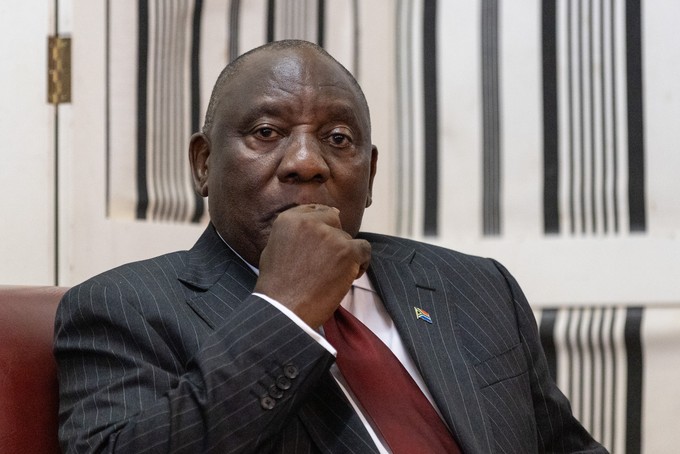
Following the judgment, President Ramaphosa indicated that he intends to review the Independent Panel’s Report. However, the Constitutional Court made it clear that the impeachment process does not automatically pause because review proceedings are contemplated. Unless the Report is set aside by a court, Parliament must continue with the impeachment process in accordance with its rules.
The Court also reaffirmed that the Impeachment Committee’s role is investigative only. The ultimate decision whether to remove a President remains with the National Assembly. The judgment therefore strengthens Parliament’s constitutional accountability by making it more difficult for impeachment proceedings to be halted before a proper investigation has been completed.
Conclusion
This judgment strengthens constitutional accountability and transparency and shows that political expediency will never trump the Constitution.
The Court further reinforces the principle that “no one is above the law” and that Parliament has a constitutional obligation to meaningfully oversee executive power.